Introduction to Generative AI: What Is It?
Welcome to the "Word Up! Bot" section of Towardscloud.com! If you’ve been following our previous sections like "Fluffy Computing" and "Artificial Unintelligence," you’re in for another exciting…
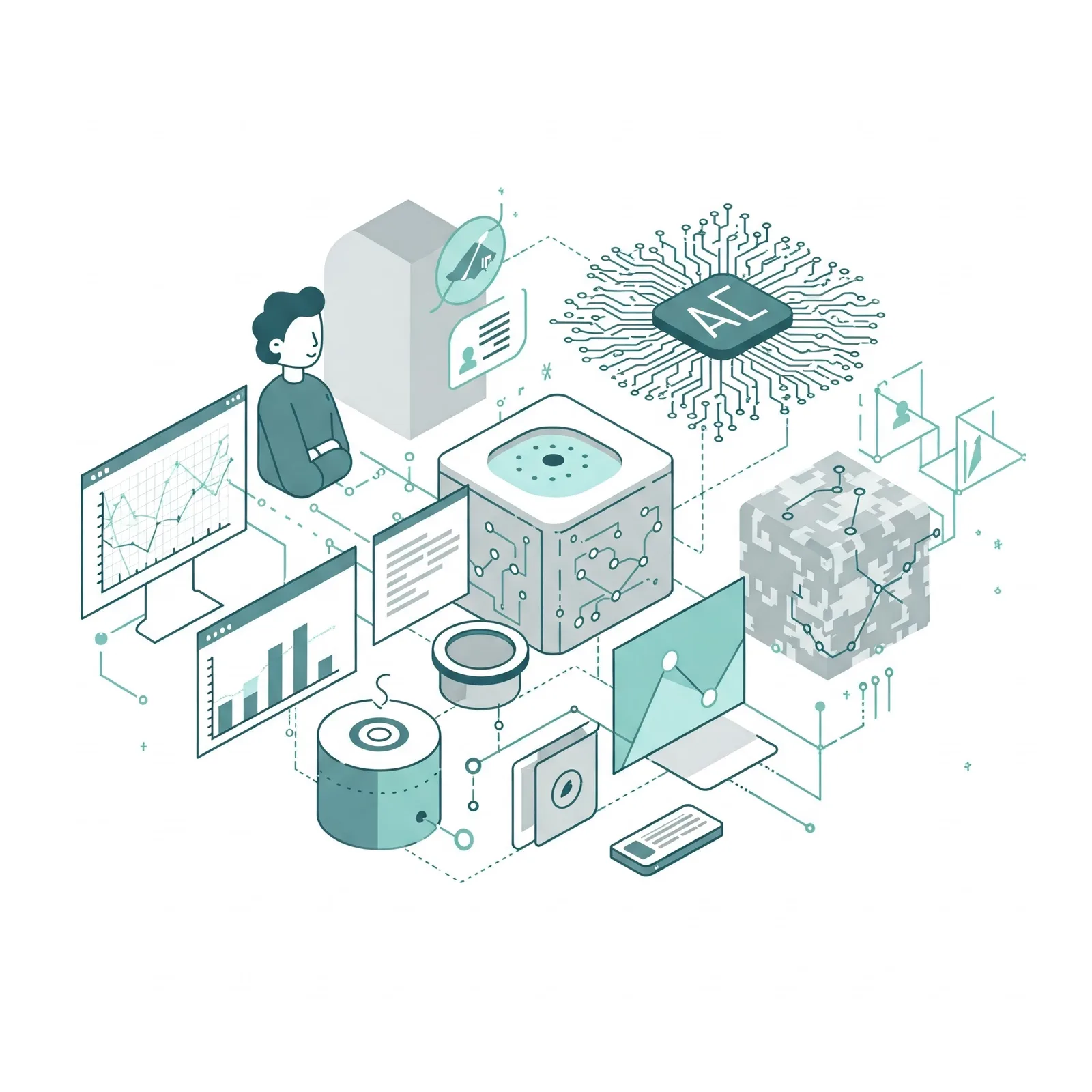
Welcome to the “Word Up! Bot” section of Towardscloud.com! If you’ve been following our previous sections like “Fluffy Computing” and “Artificial Unintelligence,” you’re in for another exciting journey. Today, we’re diving into the fascinating world of Generative AI—a technology that’s reshaping industries, sparking creativity, and raising important ethical questions. Whether you’re a tech enthusiast or just someone who accidentally clicked on this blog, let’s break it down in simple terms.
What Is Generative AI?
Generative AI is a branch of artificial intelligence (AI) that focuses on creating new content—whether it’s text, images, music, or even entire virtual worlds. Think of it as a super-smart robot that can paint, write, compose, and design, all by learning from existing data. It’s like giving a robot a paintbrush and saying, “Go wild!” And sometimes, it really does.
A friendly robot holding a paintbrush
But how does it work? Let’s simplify it:
- Generative AI learns patterns from existing data (like pictures of cats or Shakespeare’s sonnets).
- It then uses those patterns to generate new, original content that looks or sounds similar but isn’t an exact copy.
For example, if you feed a generative AI model thousands of cat pictures, it can create a brand-new image of a cat that doesn’t exist in real life. Cool, right?
How Does Generative AI Work?
Generative AI relies on advanced algorithms and architectures to create content. Here are the key building blocks:
1. Generative Adversarial Networks (GANs)
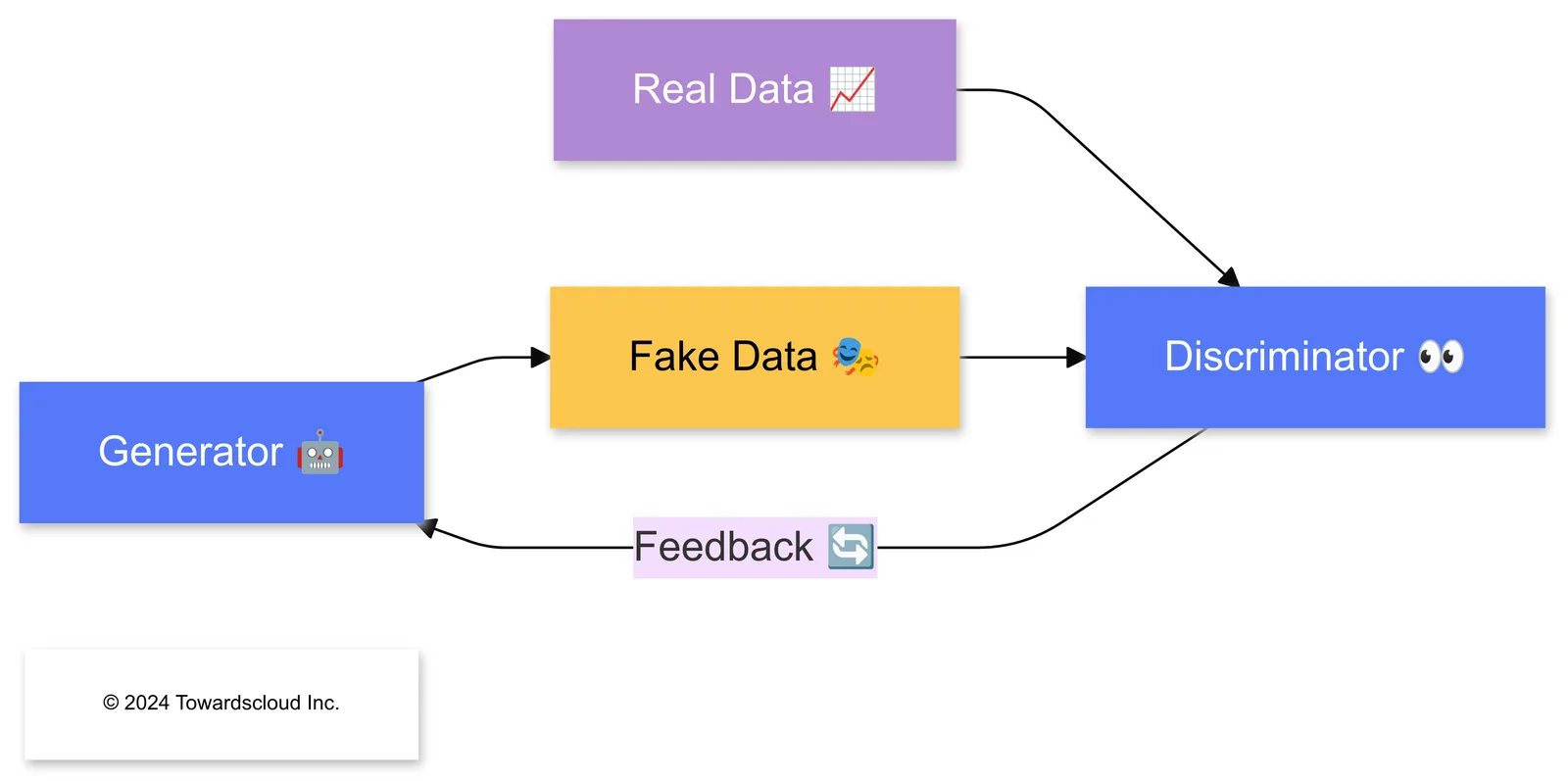
GANs are like a digital game of cat and mouse. They consist of two neural networks:
- Generator: Creates fake data (e.g., a fake cat image).
- Discriminator: Tries to detect if the data is real or fake.
The generator keeps improving until the discriminator can’t tell the difference between real and fake. It’s like a forger trying to fool an art expert!
Example: GANs are used to create realistic deepfake videos or generate lifelike images for video games.
Here’s a simple diagram to illustrate a GAN:
Don’t worry; there won’t be a quiz later.
Variational Autoencoders (VAEs)
Variational Autoencoders (VAEs)
VAEs are like AI artists who compress and decompress data. They:
- Encode: Summarize input data into a compact form.
- Decode: Reconstruct the data into something new.

Think of it as teaching AI to summarize a story and then rewrite it in its own words.
Example: VAEs are used in healthcare to generate synthetic medical data for research while protecting patient privacy.
Transformer-based Models
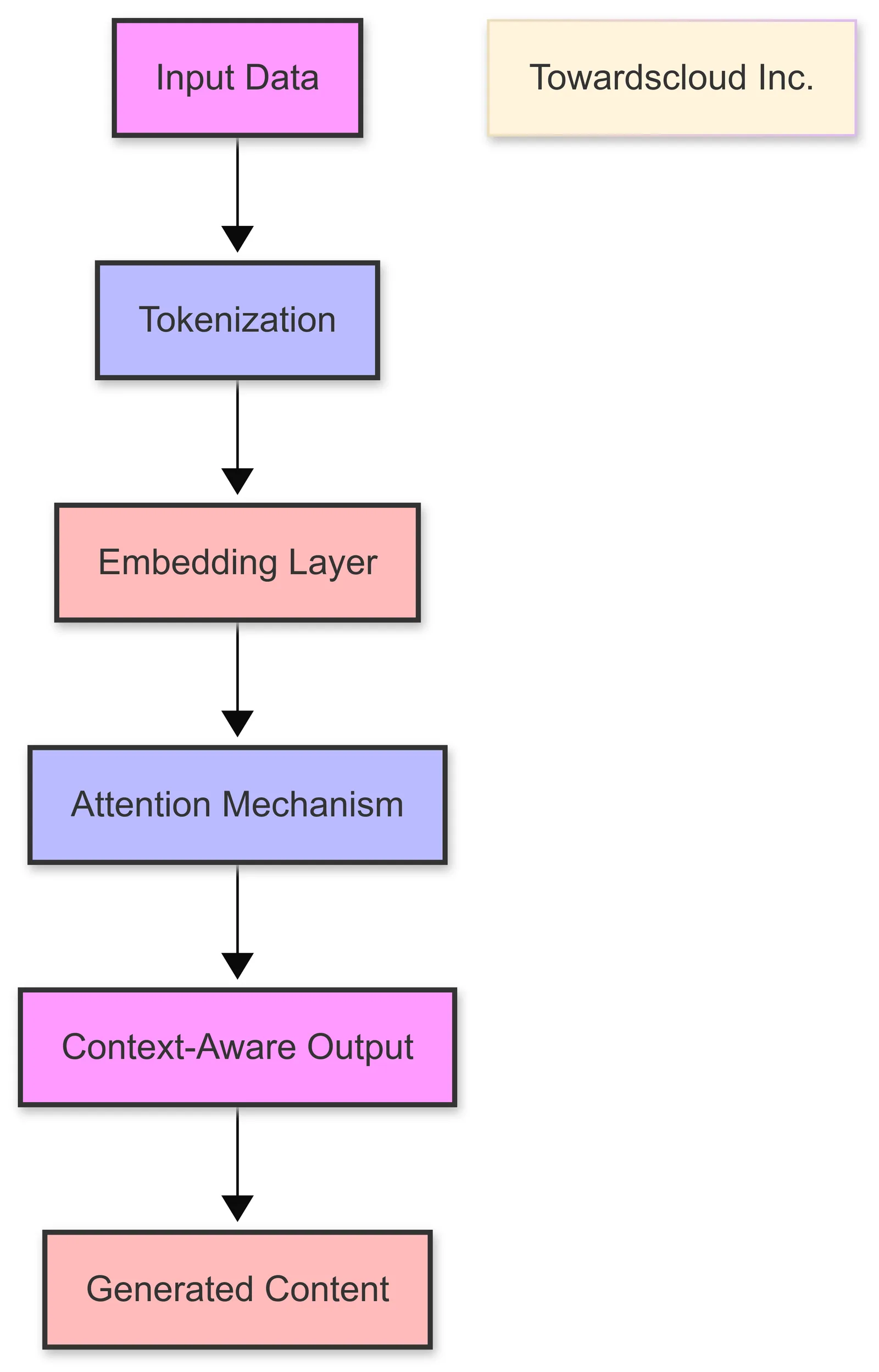
Transformers are the rockstars of generative AI. They power models like GPT-3, GPT-4, and DALL·E. These models excel at understanding context and generating coherent text, images, or even code.
How do transformers work?
- They use a mechanism called attention to focus on important parts of the input data.
- This allows them to generate highly accurate and context-aware outputs.
Example: ChatGPT uses transformers to have human-like conversations, write essays, or even help you debug code.
Generative AI vs. AI, ML, and DL: What’s the Difference?
Let’s break it down with a simple comparison:
| Artificial Intelligence (AI) | A broad field focused on creating machines that can perform tasks requiring human intelligence. | Voice assistants like Siri or Alexa. |
| Machine Learning (ML) | A subset of AI where machines learn from data to make predictions or decisions. | Recommending movies on Netflix based on your watch history. |
| Deep Learning (DL) | A subset of ML that uses neural networks to solve complex problems. | Recognizing faces in photos or translating languages. |
| Generative AI | A subset of DL focused on creating new content from existing data. | Generating realistic images, writing essays, or composing music. |
Applications of Generative AI
Generative AI isn’t just a fancy term to impress your friends at parties. It has real-world applications that are as exciting as they are diverse! Let’s explore some of them.
Applications of Generative AI
1. Art and Design
- DALL·E and MidJourney can generate stunning images from text prompts. Want a picture of a “cyberpunk cat wearing sunglasses”? Done!
- DeepArt transforms your photos into masterpieces mimicking famous artists like Van Gogh or Picasso.

2. Music Composition
- Tools like Amper Music and AIVA compose original music based on your preferences. Imagine creating a soundtrack for your podcast in minutes!
3. Text Generation
- ChatGPT can write essays, poems, or even help you draft emails. It’s like having a personal writing assistant.
- Jasper.ai helps marketers generate ad copies and blog posts.
4. Healthcare
- Generative AI creates synthetic medical data for research, speeding up drug discovery and protecting patient privacy.
- Insilico Medicine uses AI to design new drugs in record time.
5. Gaming and Virtual Worlds
- AI generates dynamic landscapes, characters, and storylines, making games more immersive.
- Unity and Unreal Engine are integrating generative AI to create endless virtual worlds.
6. Fashion Design
- Project Muze by Google uses AI to design clothing based on trends and styles. Your next outfit might be AI-designed!
Challenges and Ethical Considerations
While generative AI is exciting, it comes with challenges:
1. Deepfakes
AI can create hyper-realistic fake videos, leading to misinformation. For example, deepfake videos of politicians or celebrities can spread false narratives.
2. Intellectual Property
Who owns AI-generated content? The programmer, the user, or the AI itself? The legal system is still catching up.
3. Bias and Fairness
AI models can inherit biases from training data. For example, a hiring tool might favor certain demographics if the data is skewed.
4. Privacy Concerns
Generative AI can create synthetic data that resembles real people, raising privacy issues.
5. Resource Consumption
Training large AI models requires massive computational power and energy. For example, training GPT-3 emitted as much carbon as 5 cars over their lifetimes.
The Future of Generative AI
The future looks bright (and a little sci-fi). Here’s what’s coming:
1. Advancements in Creativity
AI might compose symphonies, write novels, or design buildings. The next Picasso or Beethoven could be an algorithm!
2. Improved Human-AI Collaboration
AI will act as a creative partner, enhancing human capabilities rather than replacing them.
3. Ethical Regulations
Governments are working on guidelines to ensure AI is used responsibly. The EU AI Act is a step in this direction.
4. Personalized Experiences
Imagine Netflix creating custom episodes just for you or AI tutors tailoring lessons to your learning style.
5. Infrastructure Evolution
The deployment of generative AI will require scalable, energy-efficient infrastructure. Companies like NVIDIA and Google Cloud are leading the charge with specialized hardware and cloud solutions.
Bias and Fairness
AI models learn from data, and if that data is biased, the AI will be too. It’s like teaching a parrot only swear words. Funny at first, but probably not ideal at a family gathering.
Here’s how bias flows through an AI model:
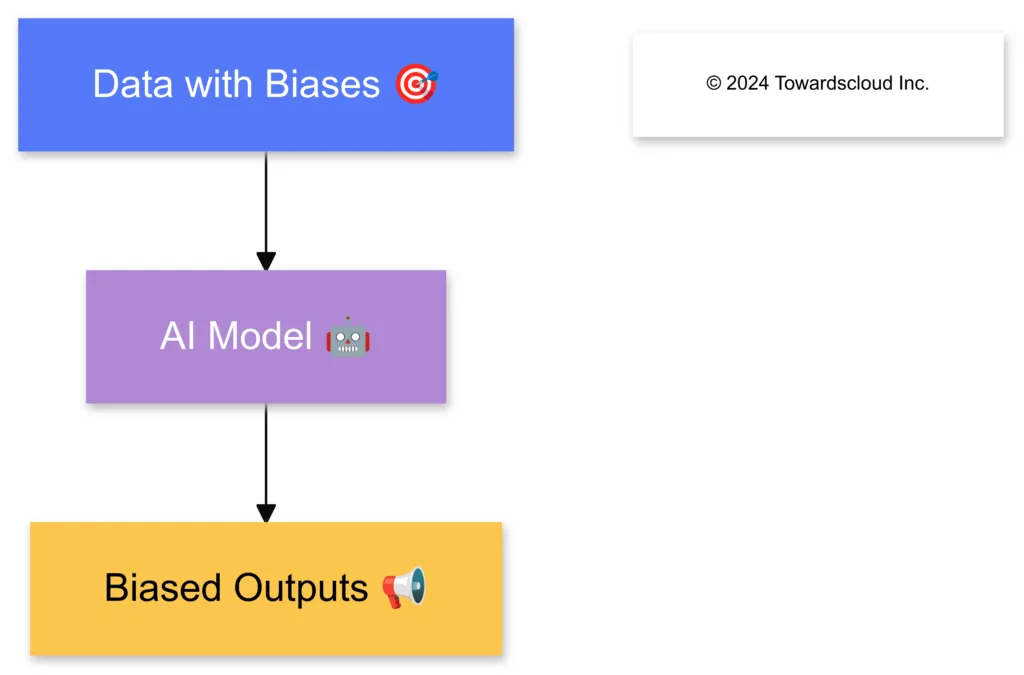
Ensuring fairness in AI is crucial. Organizations like AI Now Institute are working towards addressing these challenges.
Privacy Concerns
Generative AI can generate synthetic data that resembles real user data, raising privacy concerns. It’s like having a doppelgänger who knows all your secrets. Creepy, right?
Resource Consumption
Training large AI models consumes significant computational resources and energy. According to MIT Technology Review, training a single AI model can emit as much carbon as five cars in their lifetimes. Time to consider some eco-friendly AI practices!
The Future of Generative AI
The sky’s the limit—or maybe not. Perhaps soon, AI will tell us where the limit is. Let’s peek into the crystal ball.
Advancements in Creativity
AI might compose a symphony that brings you to tears—or laughter. Companies like OpenAI are pushing the boundaries of what’s possible. Who knows? The next Picasso might be a bunch of code lines.
Improved Human-AI Collaboration
Tools that enhance human creativity rather than replace it are on the rise. Think of AI as your creative sidekick, like Robin to your Batman, but with fewer tights.
Ethical Regulations
Governments and organizations are working on guidelines to prevent misuse. The European Union has proposed regulations on AI to ensure it’s used responsibly. EU AI Regulations
Personalized Experiences
Generative AI could lead to highly personalized user experiences. Imagine Netflix not just recommending shows but creating custom episodes just for you. Finally, a series where the main character doesn’t make terrible life choices!
Education Transformation
Generative AI can create customized learning materials, making education more accessible and tailored. Tools like Squirrel AI are leading the way. Just be careful—your homework excuses might need an upgrade. “The AI did my homework, and then ate it.”
Gartner predicts that by 2025, generative AI will account for 10% of all data produced, up from less than 1% today. That’s a tenfold increase! At this rate, AI might start generating data about us before we’re even born. Talk about proactive!
Conclusion
Generative AI is a game-changer, transforming how we create, learn, and interact. From art and music to healthcare and gaming, its applications are endless. But with great power comes great responsibility. Addressing ethical concerns like bias, privacy, and intellectual property is crucial to harnessing its potential.
So, the next time you see a stunning piece of art, hear a catchy tune, or read a compelling article, remember—it might have been created by an AI. And who knows? Maybe it’ll be polite enough to sign an autograph.
Further Reading:
How Transformers Work (Google AI Blog)
What is Generative AI? (IBM)
The Future of AI: Generative Models (MIT Technology Review)
EU AI Regulations
A robot signing an autograph
Stay tuned to Towardscloud.com for more adventures into the world of AI and beyond! Until then, keep your circuits cool and your data clean!
Part 1 of 30 · Introduction to Generative AI
- 01Introduction to Generative AI: What Is It?
- 02The History of Generative AI: From Concept to Reality
- 03Key Definitions and Concepts in Generative AI
- 04Pioneers of Generative AI: Meet the Inventors
- 05Understanding Neural Networks: The Backbone of AI
- 06Deep Learning Basics: Layers and Learning Rates
- 07Generative vs. Discriminative Models: What's the Difference?
- 08Overview of Generative Models: VAEs, GANs, and More
- 09Introduction to Variational Autoencoders (VAEs): From Basics to Advanced Applications
- 10Introduction to Generative Adversarial Networks (GANs)
- 11The Role of Transformers in Generative AI
- 12Applications of Generative AI in Everyday Life
- 13Ethical Considerations in Generative AI: Navigating the New Frontier
- 14Generative AI in Art and Music: The Creative Revolution
- 15Case Study: AI-Generated Artwork
- 16Generative AI in Text Generation
- 17Exploring OpenAI's GPT Models: Word Up! Bot
- 18Real-World Use Cases: Deepfakes and Their Impact
- 19Generative AI in Image and Video Synthesis
- 20Introduction to Reinforcement Learning in Generative AI
- 21The Future of Generative AI: Trends to Watch
- 22Generative AI in Healthcare: Opportunities and Challenges
- 23Generative AI in Finance: Risk Modeling and Beyond
- 24Generative AI in Marketing and Personalization
- 25Cloud Services for Generative AI: AWS Offerings
- 26Cloud Services for Generative AI: GCP Offerings
- 27Cloud Services for Generative AI: Azure Offerings
- 28Comparing Cloud Platforms for Generative AI
- 29Recap and Q&A: Introduction to Generative AI
- 30Building Your First Generative AI Model: A Practical Guide